01 / Restaurant story

A room held by stone, linen and time.

Marble & Linen is an Australian restaurant where dinner sets the pace and conversation is given room to unfold. Later, the evening may continue in a real card lounge: an in-person setting for offline poker, held around physical tables rather than screens. Food remains the centre of the house; cards simply offer another quiet rhythm after the table has been shared.

Explore the menu Visit the card lounge
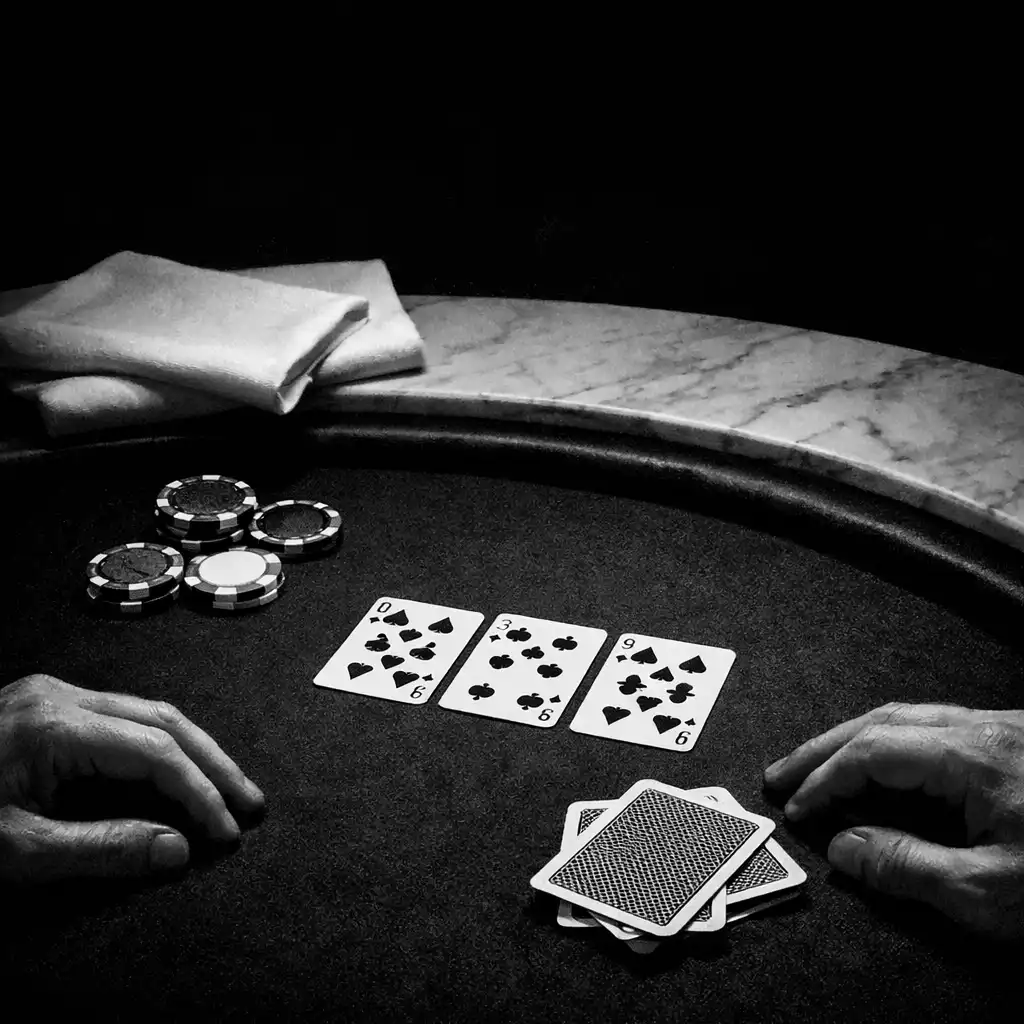
A linen-covered poker table with cards, hands, marble detail and physical chips as table props.
01 / After dinner: linen, hands and cards held at a quiet table.

02 / Premise

Hospitality with room to breathe

Dinner as the anchor

The meal gives an evening its structure: an arrival, a table, cooking brought into view through the plate, and conversation that need not compete with the room. Marble & Linen begins there. Attention is paid to the interval between gestures as much as the gesture itself, so the occasion can feel composed without becoming formal or staged.

Material as atmosphere

Cool stone, softened cloth and dark planes create a setting with texture but no theme to perform. Marble catches a low reflection; linen makes the table gentler to touch; the trace of the kitchen brings a working energy into an otherwise restrained room. These materials are not a backdrop for display. They help make a place where food and people can stay in focus.

An evening that can continue

When dinner has found its natural close, the pace can shift into the adjoining card-lounge experience. Offline poker belongs here as a social, physical ritual: guests gathered around real tables, reading the room as much as the cards. It is an extension of being present together, not a screen-based distraction. Read about the Card Lounge

03 / The room

Built from contrast

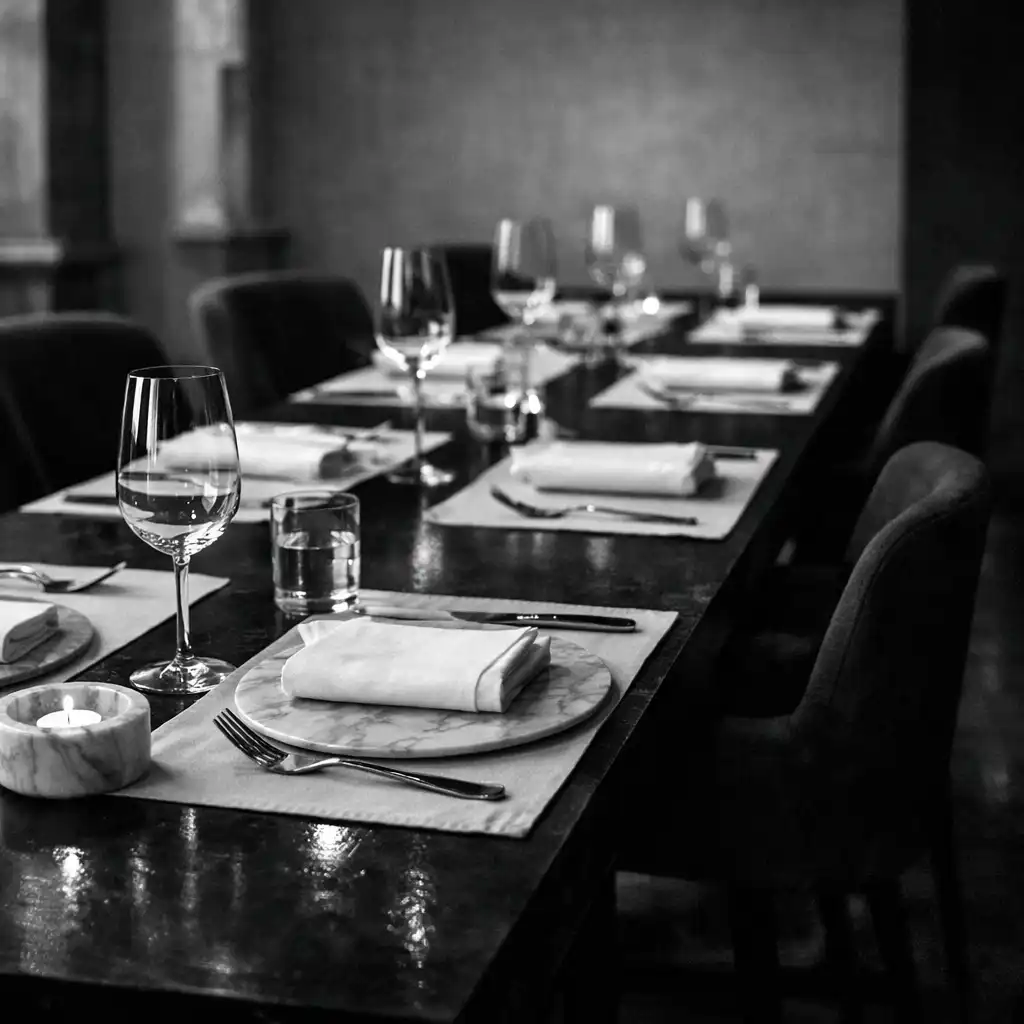
The dining room is composed through contrast: dark surfaces held against stone, linen set softly across the table, and light allowed to settle rather than announce itself. The result is calm enough for conversation, while still attentive to the small visual moments that gather around a meal.

A quiet monochrome dining room with a dark table, linen, marble detail and low reflected light.
03 / A dining-room study in linen, stone and held light.

01

Stone and surface

Marble offers a cool, durable counterpoint to the warmth of a plate and the movement of hands at the table. Its surface catches reflected light without insisting on attention, giving food, glass and cloth a clear edge. The material is felt in the pause before a dish is set down as much as it is seen.

02

Linen and pace

Linen softens the room without making it stiff. It belongs to the recurring gestures of dinner: a place being set, a glass being poured, a dish passing between people. Its presence is practical and tactile, a layer of care that lets the table feel settled while conversation continues around it.

03

Light held low

Low light brings food, faces and table details forward in their own time. The room is intended for presence rather than display, with tonal shifts that allow the eye to rest. It is not a promise of a fixed scene, but an atmosphere shaped to make the shared table feel more immediate.

04 / From the kitchen

A considered plate

01 / Seasonal attention

Seasonal attention

The kitchen works with the character of ingredients and allows each plate to remain direct rather than over-explained. Seasonal attention is a way of looking closely at what is in front of the pass: flavour, texture, temperature and the balance that makes a dish feel complete. Current dishes are best encountered through the menu, where the kitchen’s present focus can speak for itself.

02 / Texture and restraint

Texture and restraint

Cooking here values contrast without turning it into noise: warmth beside coolness, softness beside crispness, richness met by clarity. The intention is not to name every sensation in advance, but to leave space for a plate to reveal itself at the table. Detail matters because it changes how a meal is experienced, one considered mouthful at a time.

03 / A table made for sharing

A table made for sharing

Food sits within a dining rhythm shaped by conversation, by passing dishes where it feels natural, and by staying with the table a little longer. There is no prescribed way to eat the evening. Instead, the kitchen makes room for the ordinary generosity of sharing attention, space and an unfolding meal with the people already there.

See the menu
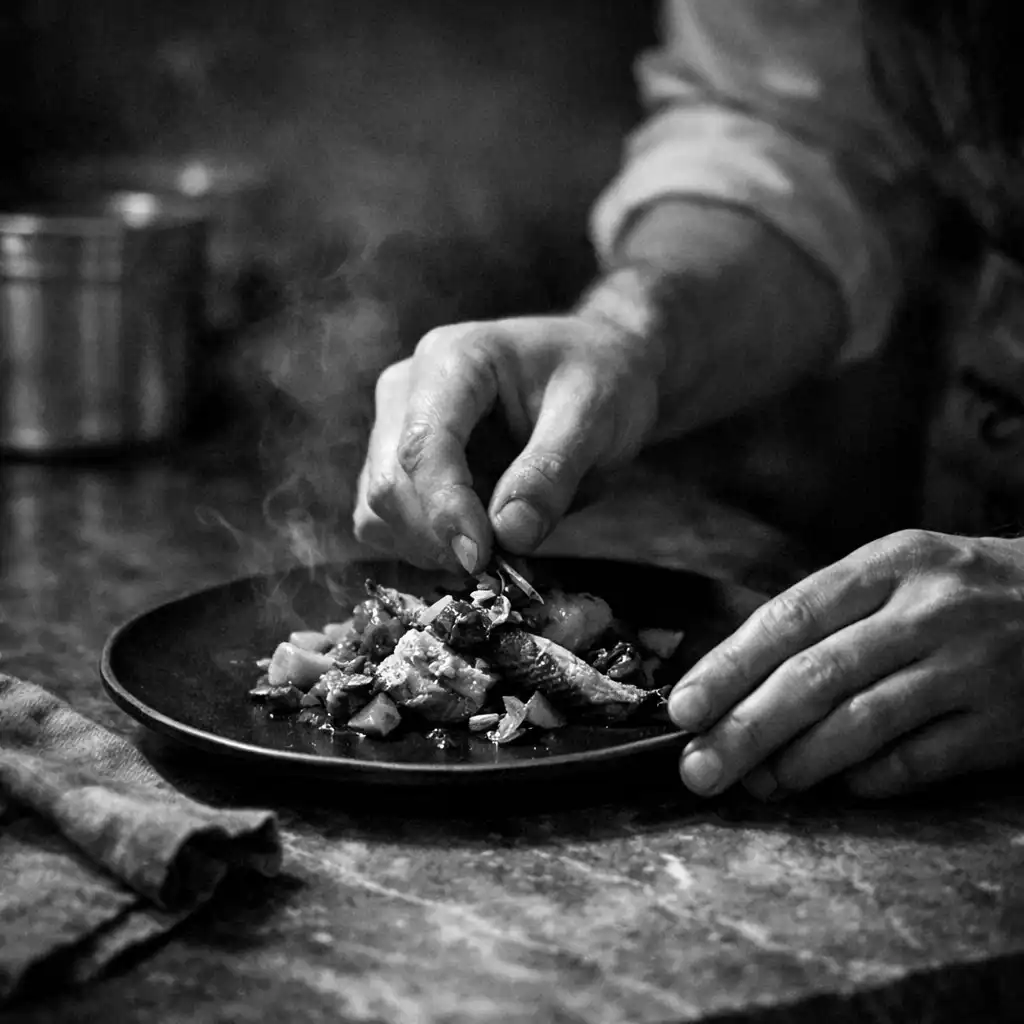
Chef hands making a final adjustment to a plated dish on a dark kitchen pass.
05 / Preparation before service, observed at the pass.

05 / Kitchen study

Hands, heat, detail

Cooking is a sequence of measured gestures: hands steadying a plate, heat held close to the pass, a working surface marked by use, and a final adjustment before a dish leaves the kitchen. These moments are small but consequential. They connect the discipline of preparation to the ease of the dining room, carrying a plate from a focused workspace into an evening shaped by people at the table.

Continue

Explore Chef Selections for a closer kitchen view

06 / The evening

Service, without hurry

01

Arrive and settle

An evening begins with the simple act of entering a composed room and finding a place within it. There is no need to rush the first moments. The setting, the table and the welcome are allowed to establish their own pace, giving conversation somewhere to begin before the meal asks for attention.

02

Eat and linger

Dinner is the central shared interval: food arriving, glasses being lifted, and the conversation at the table changing shape as the meal moves forward. The kitchen’s restrained approach leaves space for that exchange. Guests may settle into the details of the plate, or simply remain with the company and the room around them.

03

Continue into the card lounge

Later in the evening, the physical card lounge offers poker tables for guests drawn to the social ritual of cards. It is an optional continuation, not a requirement of dinner: a place to remain present with others, to notice hands and pauses around the felt, and to let the rhythm of the venue carry on in another form.

Explore Poker Tables

07 / Card lounge

Present, physical, shared

The card lounge is a distinct part of the evening’s rhythm: a physical setting beyond the dining table where the pace changes but the standard of hosting remains consistent. It is held as a real offline poker lounge, grounded in the room, the table and the people gathered around it rather than any remote or digital experience.

01 / In person

Cards around a real table

Poker here is played in person around real tables, where cards, hands and the pauses between decisions remain visible. Physical chips may appear as table props within that setting, part of the material language of a game shared face to face. The experience stays offline and rooted in the venue, with the room itself shaping the social atmosphere.

02 / Format

Texas Hold’em as a social ritual

Texas Hold’em evenings offer an in-venue format centred on attention, table etiquette and shared presence. The interest lies in the physical ritual: sitting together, reading expressions, handling cards and allowing each hand to unfold in the company of others. Learn about the Poker Tables

03 / Hosting

The same standard of hosting

The card lounge returns to the values of the restaurant: considered pacing, clear table space and respect for the people in the room. The setting changes after dinner, but the intention does not. It remains a place for face-to-face time, held with the same quiet attention as the meal that came before it.

08 / House notes

What the room asks of itself

Attention over excess

The house values considered detail and clear space over visual or social noise. That preference reaches from food to the room to the conversation held at the table. Nothing needs to compete for attention when a small, carefully observed element can make the evening feel more settled.

Objects with purpose

Tables, linen, glassware, cards and stone are useful parts of an evening, not decorative props. Each object carries a task and a texture: to hold a plate, soften a surface, catch the light, or make a physical card-lounge table feel ready for the people seated there.

Conversation has space

The room is intended to support both quiet meals and the sociability of a shared table. Conversation can move between the food, the people present and the small observations that arrive with an evening. The setting offers structure without asking every guest to experience it in the same way.

The evening remains human

Restaurant and card lounge alike are built around face-to-face presence. The experience remains offline: people sharing a table, a meal or a hand of cards in the same physical room. Marble & Linen is best encountered in person, through the ordinary rhythms that make an evening memorable.

09 / Visit in person

Paddington, in person

Continue the story at Marble & Linen in Paddington, where the restaurant and card lounge meet as one physical destination. Come for the dining room, stay with the pace of the evening, and follow the route that feels most useful to you. For a direct venue enquiry, the contact page is the clearest next step.

Venue address

18 Oxford Street, Paddington NSW 2021, Australia

Contact Marble & Linen Explore the menu

10 / Continue

The house is best understood through an evening at the table, then through the quieter rhythms that follow it.

Begin with the menu, or continue into the card lounge when you are ready to see the next part of the room.

Read the menu Enter the card lounge